What Are the Best and Most Beautiful Flags in the World?
Each country in the world has its own national flag. A national flag is a piece of cloth with a unique design usually displayed on a flagpole. It represents a country and its people. It is one of the most important and respected symbols of a country and the emblem of freedom and sovereignty.We can see flags everywhere we look in our everyday life. Flags are flown over schools, offices, and public places and carried by athletes in international competitions, as a symbol of pride, for the country that they represent. They come in many colors and are depicted with various geometric features and common symbols.The motifs found in a flag’s design typically have deep-rooted meaning and are generally associated with the history and culture of the country. This article discusses 10 of the best national flag designs in the world.
10. Kiribati
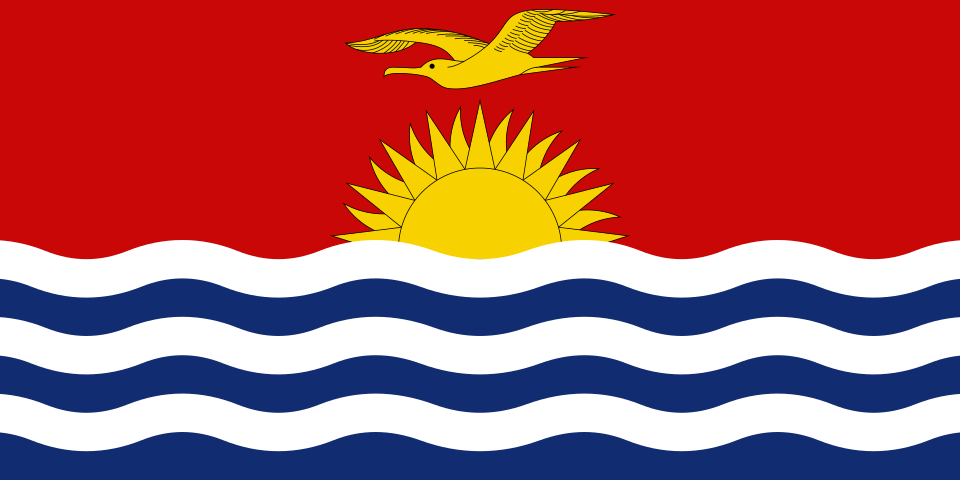
Kiribati’s flag is one of the coolest in the6 world. It depicts sunset on the shores of the Pacific nation of Kiribati. The flag is made up of a red upper field, a yellow frigate bird, a gold sun, and a sea of three white and three blue wavy lines. The bird symbolizes strength, independence, and Kiribati tribal dance rhythms. The sun represents the country’s location at the equator. The sea is the Pacific Ocean, which surrounds the archipelago. The wavy white and blue lines represent the three island groups—the Gilbert Islands, the Phoenix Islands, and the Line Islands. The 17 rays of the sun represent the 16 Gilbert Islands and the Banaba.
9. Uzbekistan
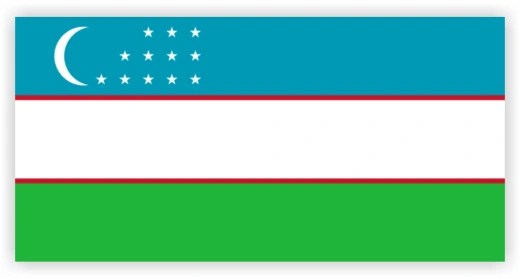
One-third of countries in the world have religious symbols on their national flag to represent their beliefs, ideals, and rituals. The national flag of Uzbekistan is special because it contains not only a religious symbol but the history of the Uzbek religions.
Green, as well as the crescent moon on the canton, symbolizes Islam, the most prevalent religion of the country. White stands for Zoroastrianism, the ancient pre-Islamic religion of the country. Blue signifies the blue sky, which is the abode of God. The two thin red stripes that separate the three major colors represent the minority religions.
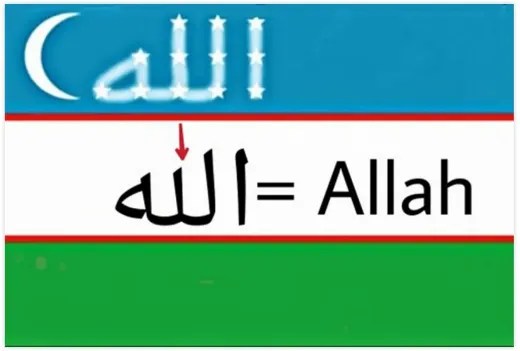
The 12 stars beside the crescent moon represent the 12 imams of Islam, the 12 zodiac signs of the horoscopes, and the 12 months of the year. The arrangement of the 12 stars forms the word “Allah” in Arabic script.
8. Estonia

The flag of Estonia is three-colored with three horizontal bands of blue, black, and white. Blue stands for faith, loyalty, and devotion; black represents the dark history of the country, and white signifies enlightenment and virtue. The design looks very simple but has a special meaning. Nature is the cornerstone of the Estonian culture, thus the source of inspiration for their flag is natural scenery. The design is derived from the winter forest on the horizon—blue is the sky, black is the dark forest, and white is the winter snow that covers the ground.

Photo Source: Nikolai Kolosov via Unsplash
7. Ukraine
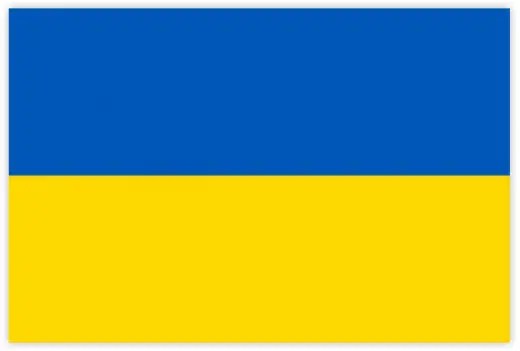
The national flag of Ukraine is another simple but meaningful design. It holds the country’s sobriquet, “the breadbasket of Europe.” Ukraine has been given this nickname because of its massive agricultural production and vast fields of wheat and other food products.
By seeing the flag of Ukraine, it is somewhat a reminiscent of a golden wheat field under the bright blue sky. The blue is the sky and the yellow is the golden wheat field.

Photo Source: Yuvinga, via Pixabay
6. United States of America
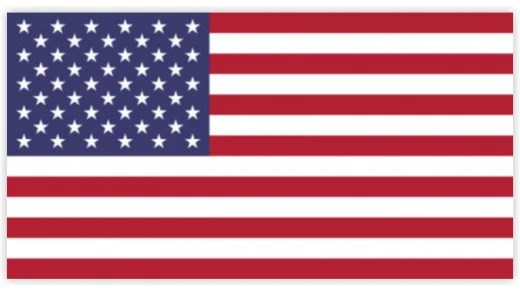
The U.S. flag is also called the “Star-Spangled Banner” or “Old Glory.” It bears both the past and present history of the United States. The 50 stars represent the 50 U.S. states, while the 13 stripes represent the 13 original states, which were initially British colonies that declared independence from Great Britain.
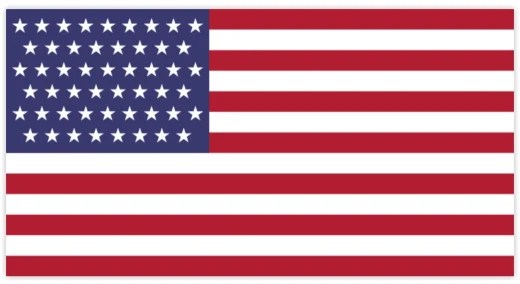
Furthermore, the U.S. flag is completely modular. It can be modified without affecting its overall aesthetic by adding a star on the flag each time a state joins the union. It has been modified 26 times since its creation in 1776. In fact, the current design is not permanent—it will be replaced by a flag with 51 stars if a new state joins the union.
5. The Philippines
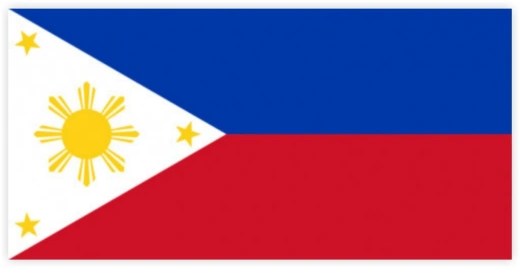
The Philippine national flag has equal bands of blue and red colors. The blue band means peace as well as truth and justice, whereas the red band means war as well patriotism, valor, and the bloodshed of the people who fought for independence.
At the hoist, there is a white equiangular triangle that symbolizes equality, liberty, and fraternity. At the center of the triangle, you can see a sun. It symbolizes hope, freedom, people’s democracy, and sovereignty. The eight rays of the sun stand for the first eight provinces which initiated a revolution against Spanish rule.
The three stars, one at each corner of the triangle, stand for the three major groups of the Philippine islands—Luzon, Visayas, and Mindanao. The color of the celestial bodies themselves, which is gold or yellow, is for the richness of its natural resources.
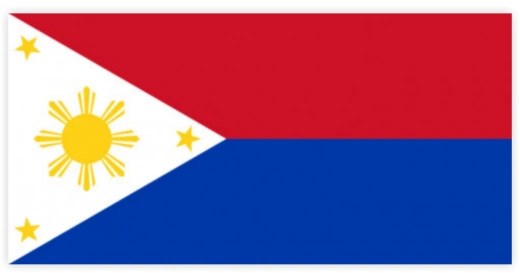
The Philippine flag is unique as it is the only flag in the world that has colors that swap. The red stripe can switch with the blue stripe which is effectively achieved by flipping the flag upside down. It is conducted to indicate whether the Philippines is in a state of peace or war. When the blue stripe is on top of the red stripe, it means that the country is in a state of peace. When the red stripe faces up and the blue stripe goes down, it means the country is in a state of war.
The history of the Philippine flag being flown upside down includes World War II, the Filipino-American War, and the Japanese occupation.
4. Iceland
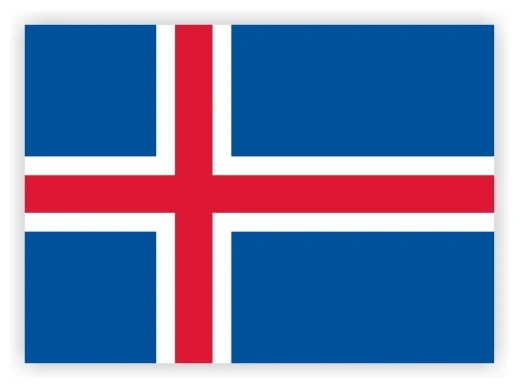
Iceland is a Christian island nation in Europe, located in the North Atlantic Ocean. It is well known as the “Land of Fire and Ice” because of its physical geographical feature—volcanoes and glaciers stand side by side.
The flag was based on the country’s religion, landscape, and sobriquet. The cross is for Christianity (the most prevalent religion in the country), and shows the relation of Iceland to the Nordic countries (most of the flags of the Nordic countries have a similar cross design).
The color blue stands for the seas that surround the country—white is for ice, snow, and glaciers that cover the island, and red is for magma and lava produced by volcanoes. On the flag, you can discern an erupting volcano whose lava spills on the icy island and flows into the sea.
3. Canada
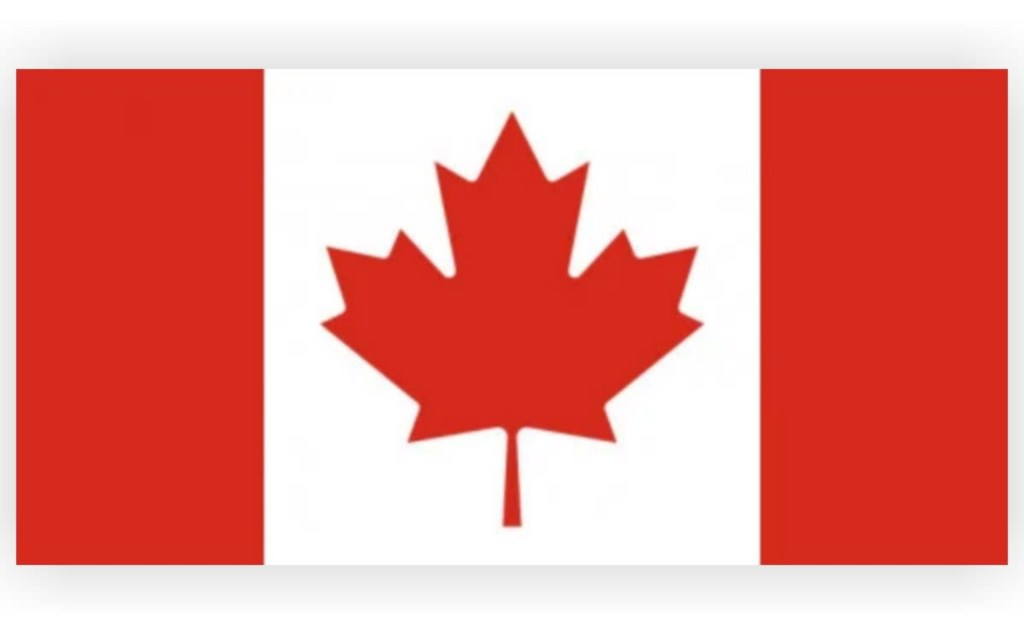
Vexillologists (flag experts) describe the Canadian flag as one of the most beautiful flags in the world due to its simple but compelling design. The flag has Canada’s two national colors, red and white, which also have other meanings—red symbolizes prosperity and hope, while white is for neutrality, peace, and tranquility, as well as the Canadian sobriquet the “Great White North.”
The red-white-red pattern is based on the flag of the Royal Military College of Canada and the ribbon of the Canada General Service Medal of 1899, a British decoration given to those who defended Canada in 19th-century battles.
The iconic feature of this flag is a maple leaf in the center, which is a national emblem of the country and a widespread symbol found everywhere in Canadian popular culture like books, songs, coins, badges, banners, and many other items. It represents pride, courage, and loyalty.

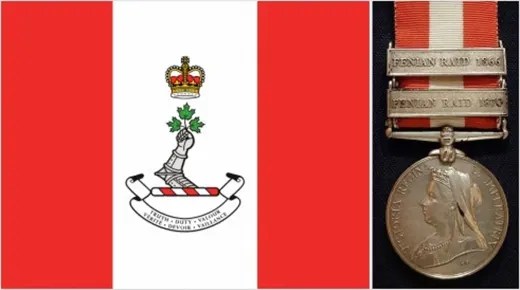
Photo Source: Left Photo: Public Domain; Right photo: own by Daderot, CC0, via Wikimedia Common
2. United Kingdom
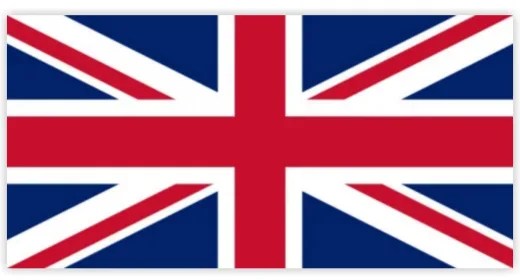
The United Kingdom has been called “countries within a country” because it is comprised of four nation—England, Scotland, Northern Ireland, and Wales—united under one sovereign.
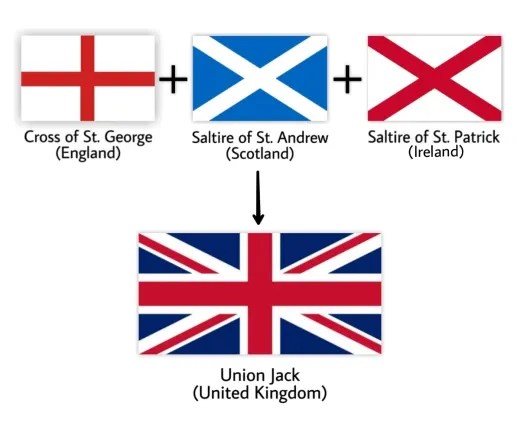
The flag of the United Kingdom is called Union Flag, due to its simplified amalgamation of three separate flags—the flag of England, the flag of Scotland, and the unofficial, old flag of Ireland.
The flag of England, also called the Cross of St. George, is a red cross on a white background. The flag of Scotland, also called the Saltire of St. Andrew, is a white saltire on a blue background. The unofficial, old flag of Ireland, also called the Saltire of St. Patrick, was a red saltire on a white field.
Union Jack was originally a Royal flag. The Royal flag was created when England and Scotland united, and the flag was only a combination of the flags of the two countries. Later, Ireland joined the union, and the Royal flag was added with the Saltire of St. Patrick (the unofficial flag of Ireland during that time), thus creating the Union Jack. It is amazing, isn’t it?
However, Ireland is no longer part of the United Kingdom since it became an independent country. But the northern part of Ireland, which is now Northern Ireland, decided to retain its British status. When the Republic of Ireland and Northern Ireland were separated, they adapted their own new flags.
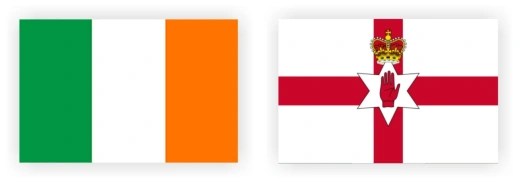
But the Union Jack has not been changed. The symbol of Ireland is still there and has not been replaced by the new symbol of Northern Ireland. So far, the British recognize the Saltire of Saint Patrick representing Northern Ireland in the Union Jack.
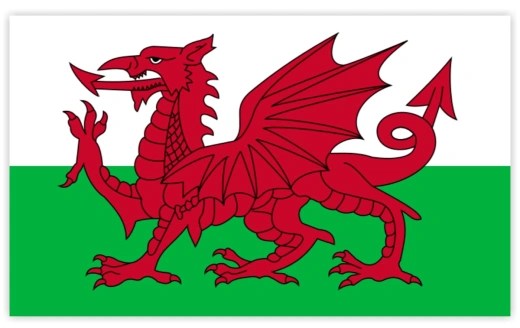
Wales is missing in the Union Jack because when the flag was created, Wales was part of England. For this reason, some people assume that the Cross of St. George represents both Wales and England. Fortunately, there is a petition to add the flag of Wales into the Union Jack to represent Wales.
1. Nepal
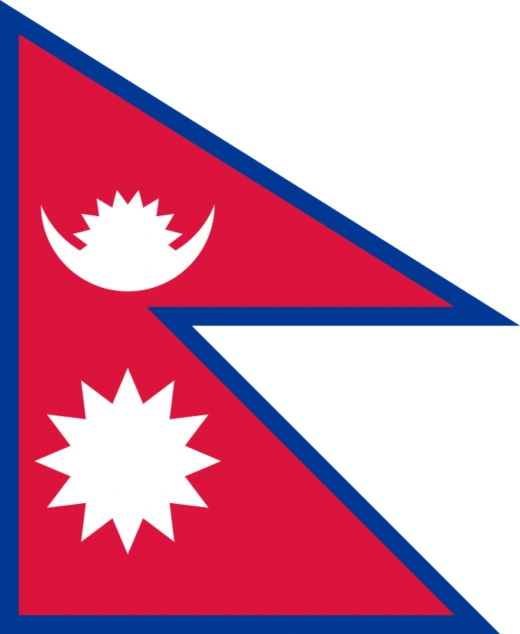
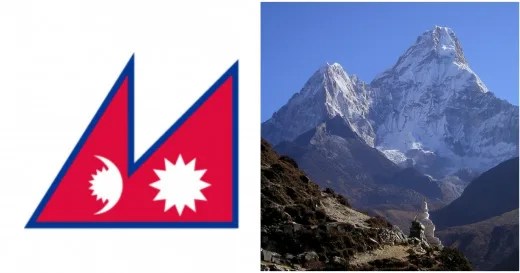
Nepal is the only country in the world whose national flag is a non-quadrilateral. The shape of the flag is five-sided and can be described as a double triangular pennant.
It is a representation of the Himalayan mountains, a geological feature in Nepal where the tallest mountains in the world (including Mount Everest) are located. When rotated 90 degrees to the left, it generates an image resembling the mountains.
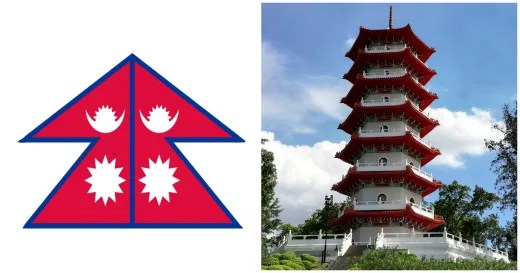
The two pennants also represent the two major religions of the country, Buddhism and Hinduism. When the flag is being mirrored, it generates an image of a pagoda, the sacred building for Buddhists and Hindus.
The flag’s coloration is also symbolic. It is made up of three different colors: crimson red, dark blue, and white—the popular colors in Nepalese art and decoration.
The major color is crimson red, which is the national color of Nepal. It is also the color of Rhododendron, the national flower of the country. It represents the brave spirit of its people. The blue color stands for peace and harmony, while white represents light and awakening.
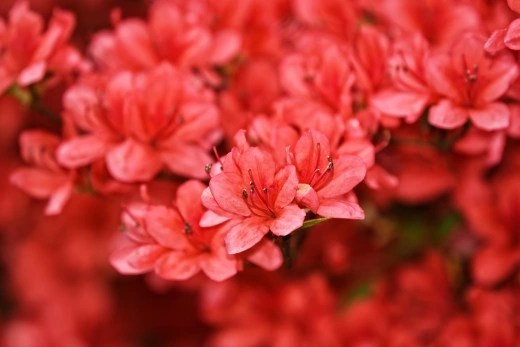
Source: Mabel Amber, Pixabay
The depiction of celestial bodies—the moon and the sun—is for permanence, and the Nepalese saying, “Nepal will exist as long as the sun and the moon remain in the sky.”
The moon also represents calmness and the cold temperature of the highland region, whereas the sun also symbolizes fierce and warm temperatures in the lowland region.
The eight spikes of the moon represent the eight phases of the moon, while the 12 rays of the sun represent the 12 stages of the sun.
Honorable Mentions:
Sources of Information:
- Flag timeline | US History.org
- Flag: Origins, Forms, & Functions | Britannica
- Union Jack | The Royal Family