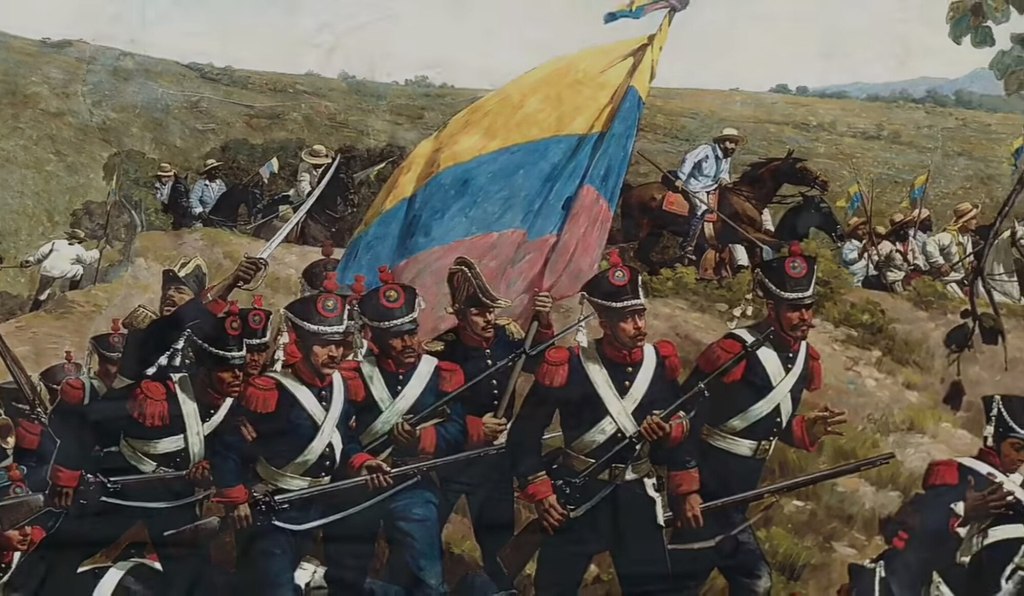
There are three countries in the world that use national flags with yellow, blue, and red stripes—Colombia, Venezuela, and Ecuador. Other than that, there are many smaller states and political bodies also use the same color combination in their flags. Surprisingly, these places are all located in the northern part of South America. This is not just random color choices. They are deeply intertwined with history and aspirations.
In this article, we will discuss flags with yellow-blue-red pattern and explain why this color combination was chosen for them.
Why Yellow-Blue-Red Flags Are Common in Northern South America?
The explanation lies in a shared historical origin: Gran Colombia. Gran Colombia was a former republic that once comprised northern South America and the lower part of Central America. It was formed after gaining independence from Spain and it used a yellow-blue-red striped flag with a coat of arms at the center.
Eventually, by the 1830s, due to political conflicts, it collapsed into five modern-day countries: Colombia, Ecuador, Venezuela, Guyana and Panama. After the breakup, Colombia, Ecuador, and Venezuela simply kept the tricolor for their new flags, with only slight changes to the design. Panama and Guyana, however, adopted different flag designs after they fell under the influence other invaders. Panama, for example, had fallen under the rule of United States, so its current flag that features red, white, and blue with symbolic stars is inspired by the U.S. flag.
What Do Yellow, Red, and Blue Represent in the Flags?
Each color has its own symbolic meaning. The details are as follows:
- Yellow means wealth and the richness of the lands in natural resources.
- Blue stands for the sky above, the sea and the bountiful aquatic resources that sustain the nations.
- Red symbolizes the bloodshed and valor of the people who fought for the independence.
National Flags With Yellow-Blue-Red Color Schemes
1. Colombia
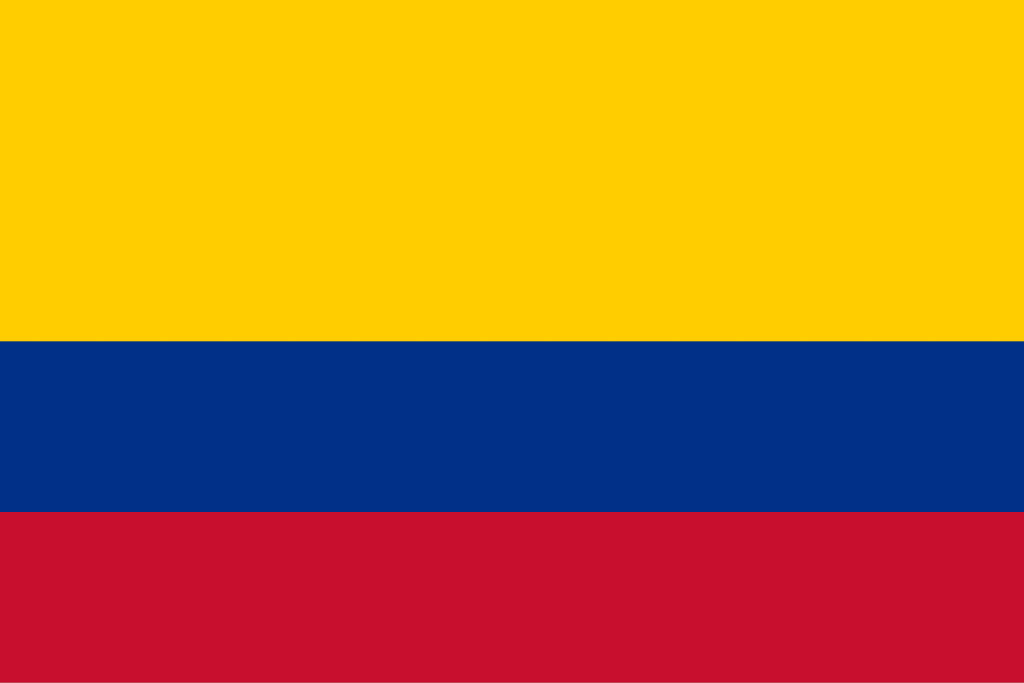
The national flag of Colombia has just a simple design, consisting only of horizontal bands of yellow, blue, and red. The yellow band takes up the upper half of the flag, while the blue and red bands each occupy a quarter. This design is based on the stripes of the first flag of Gran Colombia.
2. Venezuela
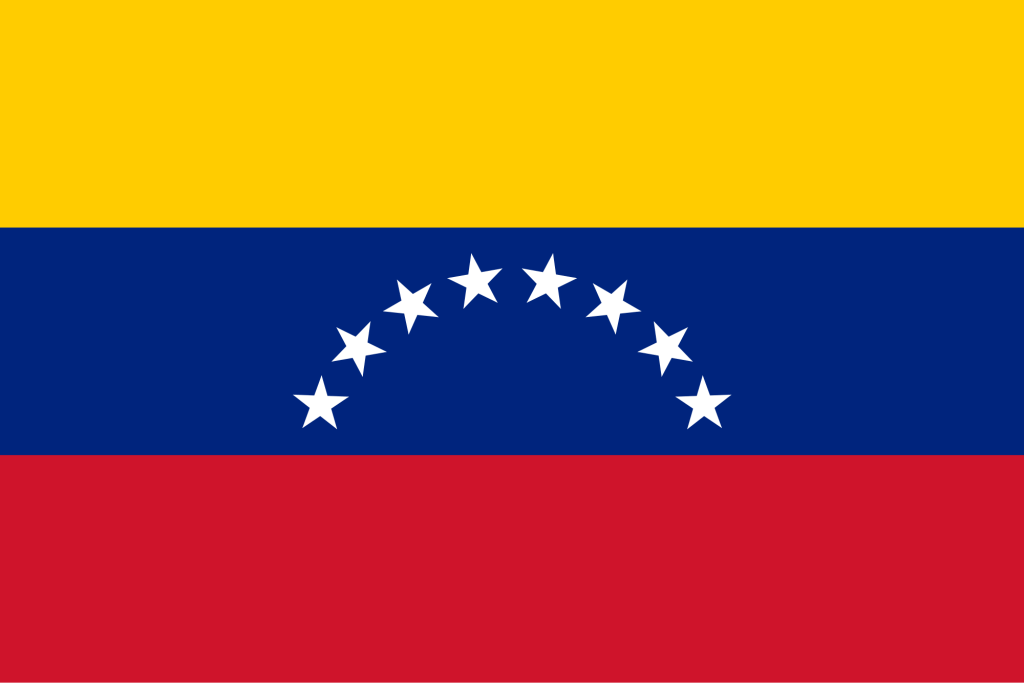
Unlike the Colombian flag, the Venezuelan flag consists of yellow, blue, and red stripes of equal width. It also has eight white stars arranged in an arch at the center of the blue band. Each star represents one of Venezuela’s old provinces. Seven of them represent the provinces that initiated the revolution against Spanish rule in 1811. These provinces are Caracas, Cumaná, Barcelona, Barinas, Margarita, Mérida, and Trujillo. The eighth star is added for Guayana, which joined the movement later and was added by decree of Simón Bolívar in 1817. Over time, this number grew, and today, Venezuela is made up of 23 states.
3. Ecuador
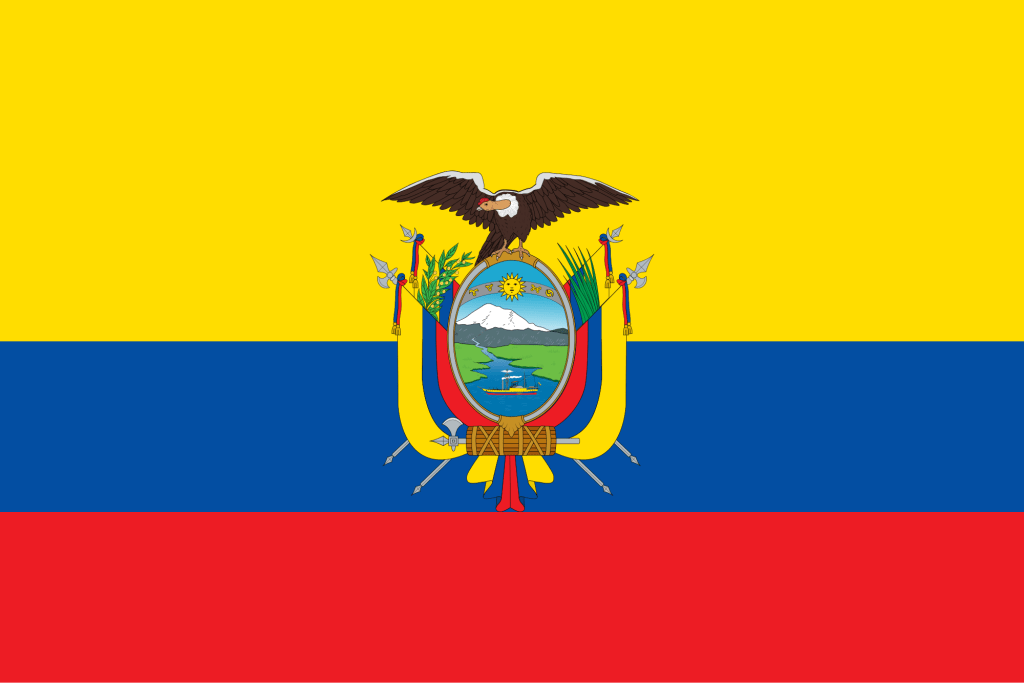
The national flag of Ecuador features three horizontal stripes of yellow, blue, and red, with the Ecuadorian coat of arms at the center. Like the Colombian flag, the yellow stripe covers the upper half, with blue and red share the remaining space. The coat of arms is made up of different elements, which include an Andean condor, an oval shield, four yellow-blue-red striped flags, laurel and palm leaves, axes, and consular fasces.
The four flags represent Colombia, Guyana, Panama, and Venezuela—countries other than Ecuador that were once part of Gran Colombia, reflecting the aspiration for unity among these nations.
The laurel leaves symbolize glory, while the palm leaves represent peace. The axes and consular fasces signify Ecuador’s commitment to protecting its sovereignty.
At the center of the coat of arms is an oval object. Within that oval object, you’ll see images of the Chimborazo volcano, the highest peak of Ecuador; the Guayas River, the largest river in the country; and the Guayaquil shipyard, South America’s first steamship.
At the top of the coat of arms is an Andean condor. It is the national bird of Ecuador and symbolizes freedom and strength.
Other Flags With Yellow-Blue-Red Motifs
Flags of Gran Colombia:
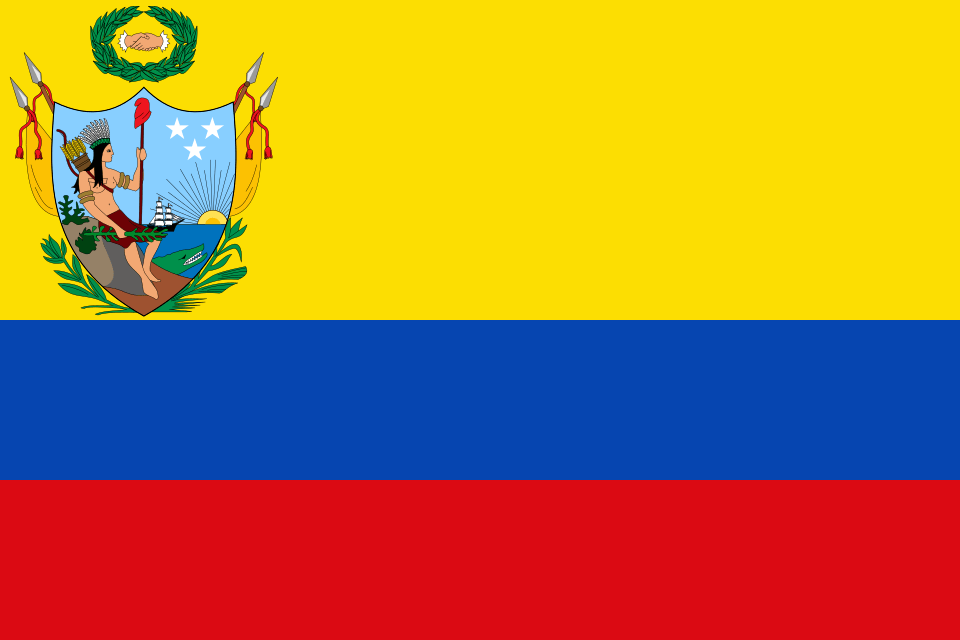
First Flag of Gran Colombia (1819-1820) – The first flag of Gran Colombia was the inspiration for the tricolor design of Ecuador and Colombia. Like the two national flags, it had yellow, blue, and red stripes; yellow stripe covered the upper half, while the blue and red stripes shared the lower half equally.
It only differed in that a coat of arms was placed on the left side of the yellow stripe. One noticeable element in the emblem was a man holding arrows and spears. It represented the life of the people during the precolonial period in the Amazon forest.
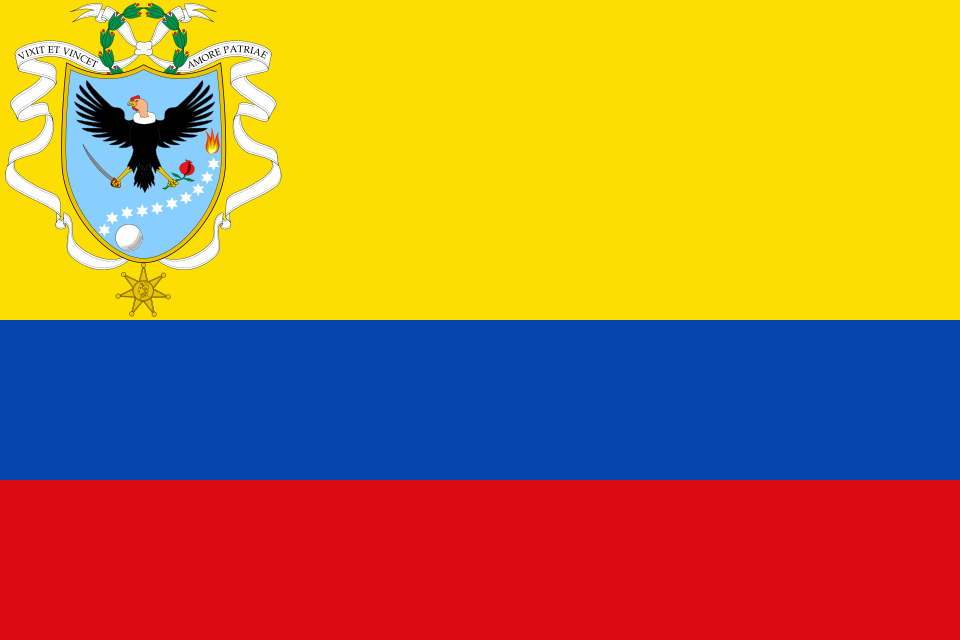
Second flag of Gran Colombia (1820-1821) – The first flag of Gran Colombia remained in use between 1821 and 1822. However, during that time, the Department of Cundinamarca, which now mostly comprises present-day Venezuela, used a different version. This banner had the same tricolor stripes as the first Gran Colombian flag but differed in its emblem. The left side of the yellow band was depicted with the regional coat of arms of Cundinamarca instead of the national coat of arms of Gran Colombia. It featured an Andean condor, a significant bird found in the Andes mountains, a mountain range found in South America.
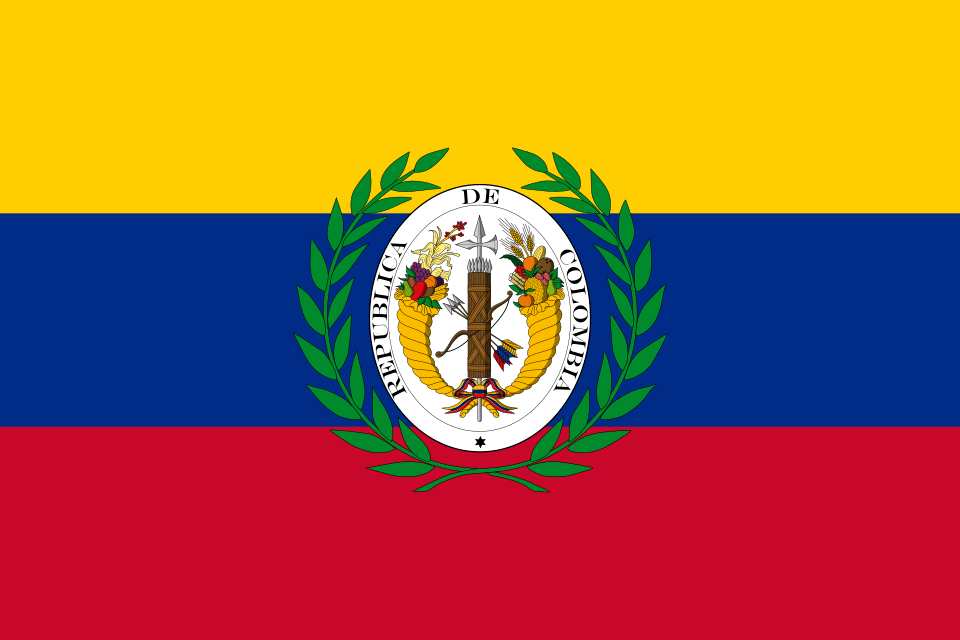
Third Flag of Gran Colombia (1821-1830) – The third flag of Gran Colombia was used throughout the entire territory of the republic. It was the last flag of the state before it dissolved into multiple independent countries. In this version, the tricolor stripes had equal width, which became the basis for the modern flag of Venezuela. It featured the updated (formerly used) coat of arms of Gran Colombia.
Yellow-Blue-Red Flags in History and Outside National Symbols:

Civil Ensign of Colombia – This civil ensign has a blue vertical oval outlined in red with a white pointed star in the center.
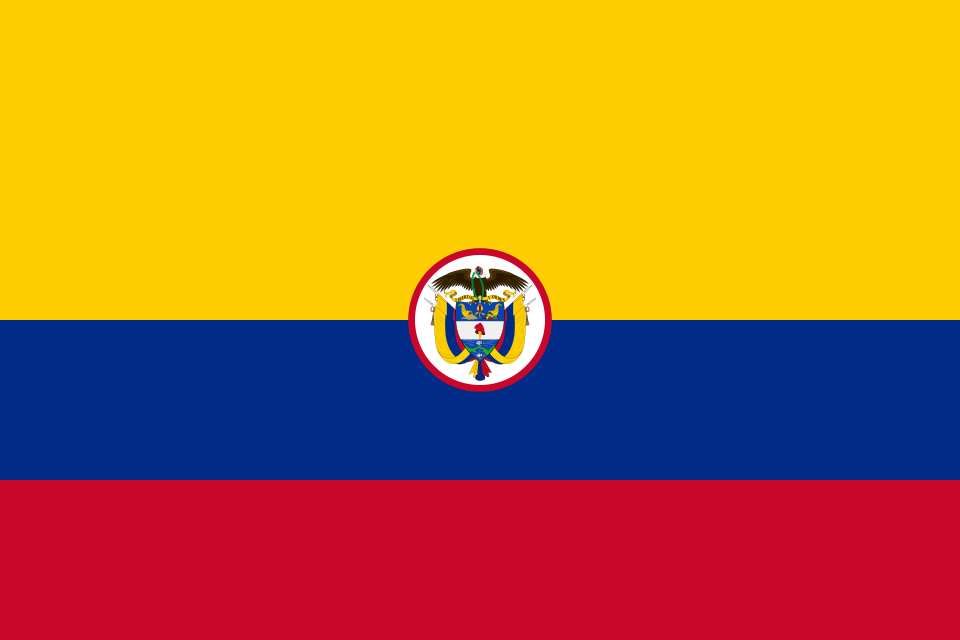
1932 Naval Ensign of Colombia – The naval ensign of Colombia has a coat of arms in the center. LIke the coat of arms in the flag of Ecuador, it carries an Andean condor and four yellow-blue-red flags.
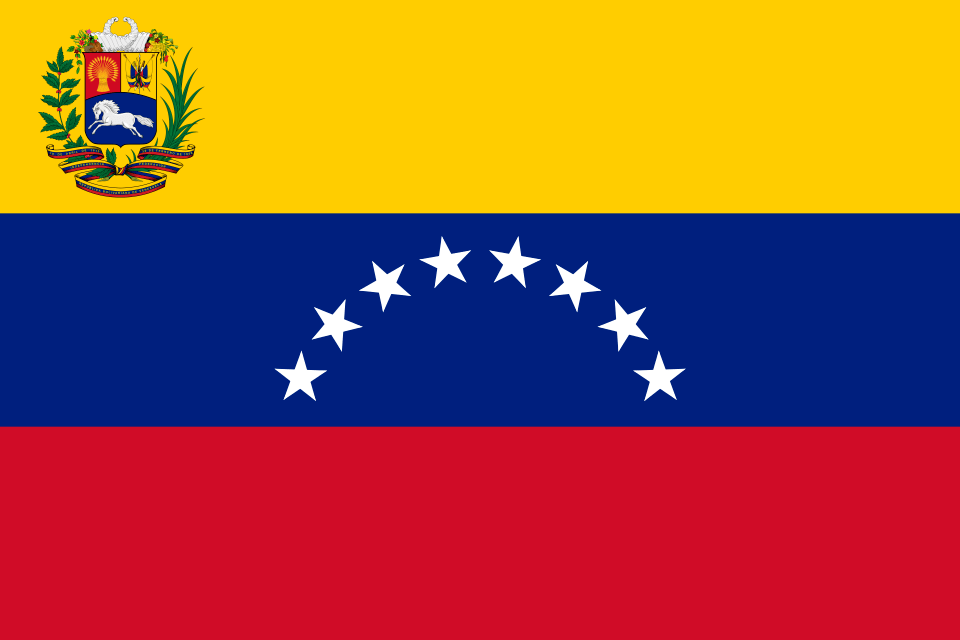
State, naval and war ensign of Venezuela – In Venezuela, this ensign has three purposes: it serves as the state, naval, and war banner of the country. The design closely resembles the national flag, with the addition of the national coat of arms placed on the left side of the yellow band.

1863–1905 Flag of United States of Venezuela – This flag featured seven white stars arranged in a hexagonal pattern. Venezuela used it for over 41 years, from 1863 to 1905, before the state of Guayana officially joined the union.
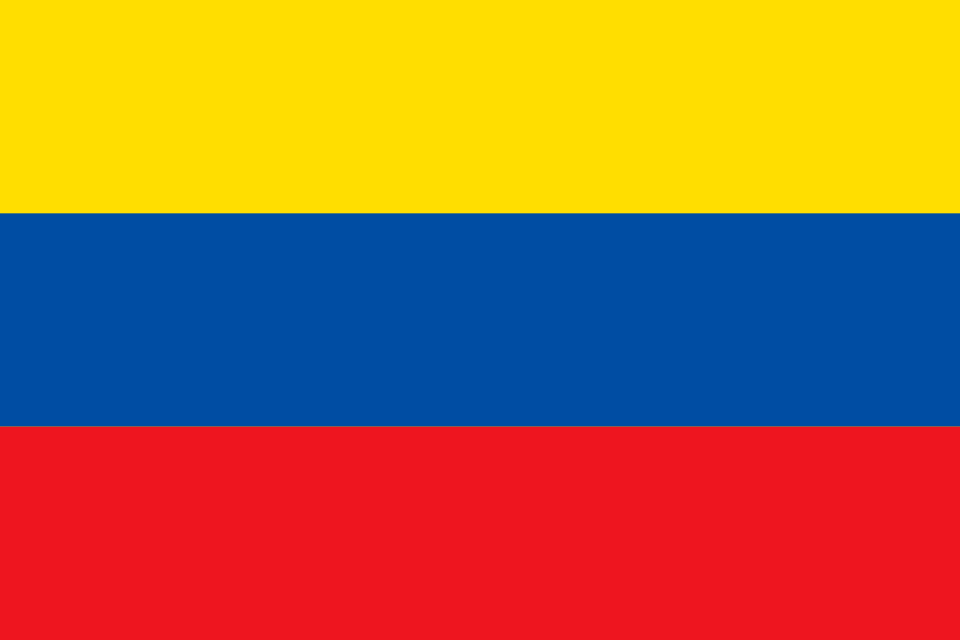
1835–1845 Flag of Ecuador – It was the first flag used officially by Ecuador after its separation from Gran Colombia. It had only a simple design, consisting only of horizontal bands of yellow, blue, and red of equal width.
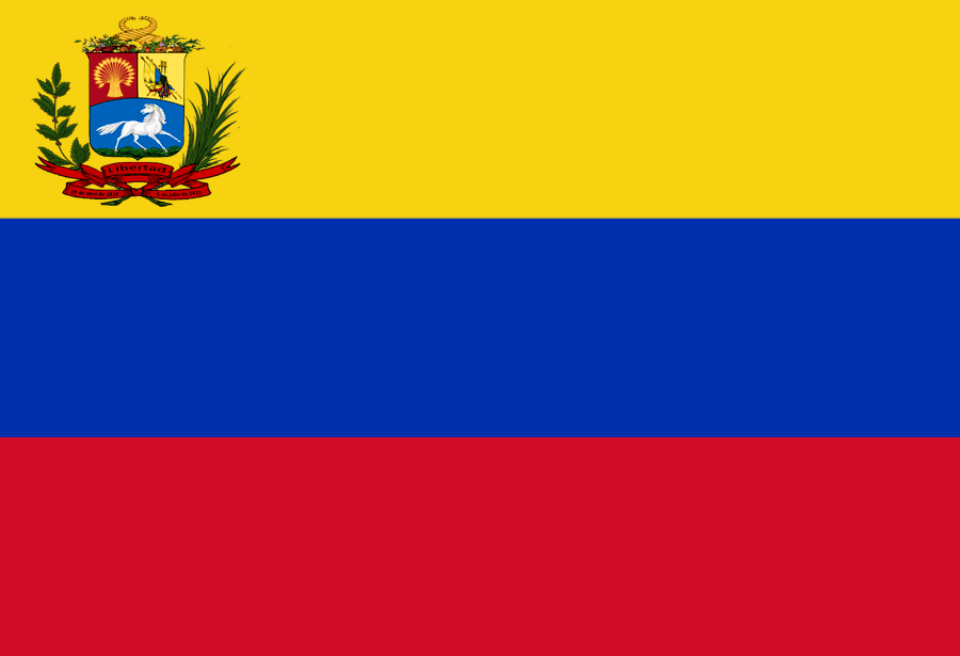
1836–1859 Flag of the State of Venezuela – Its design was similar to today’s state, naval, and war ensign of Venezuela. The main differences were the absence of the eighth white star and the direction of the horse in the coat of arms, which originally faced right instead of left.
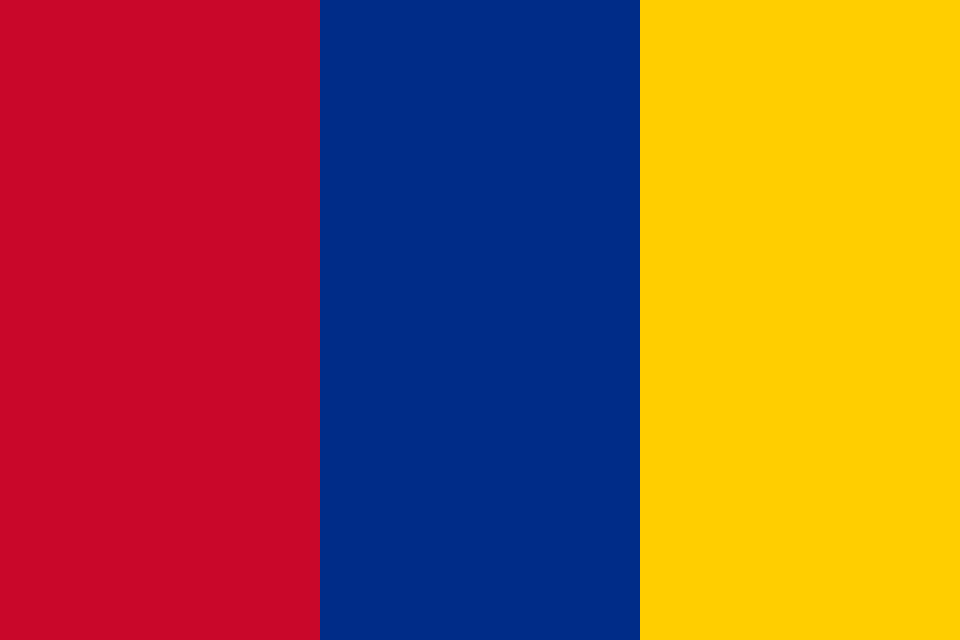
1831–1863 Flag of Republic of New Granada – New Granada was a newly formed republic that emerged after the collapse of Gran Colombia into smaller states. It comprised present-day Colombia, Panama, and smaller parts of northern South America. Its flag had no coat of arms or emblem and the tricolor stripes—yellow, blue, and red— were arranged vertically in reverse order, unlike the horizontal arrangement seen in Gran Colombia’s flag.
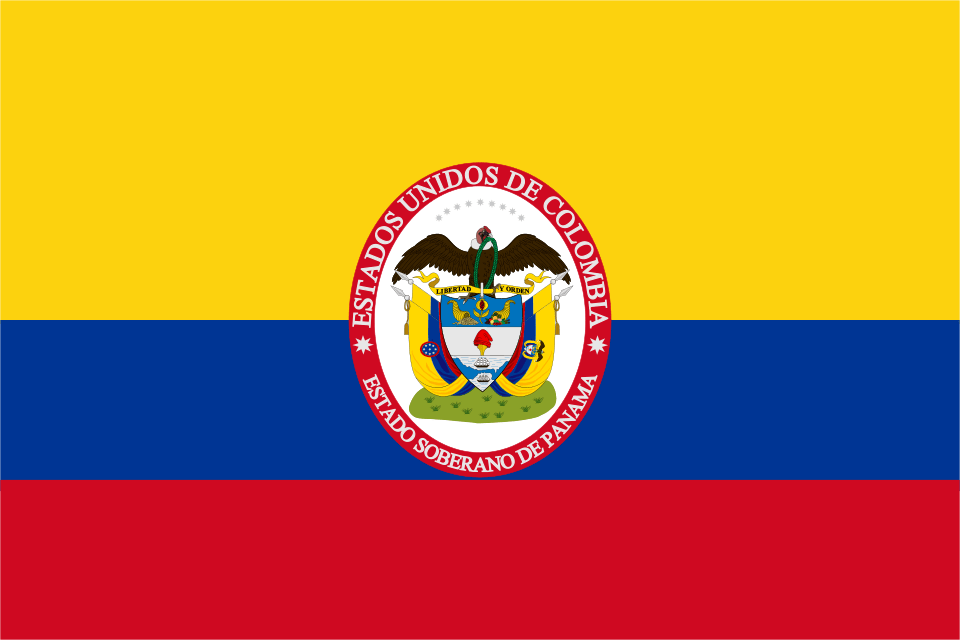
1855–1863 Flag of the Federal State of Panama – Another flag with vertical yellow, blue, and red bands is that of the Federal State of Panama. This state once belonged to the Republic of New Granada and later became part of the United States of Colombia. Now, the former territory makes up most of present-day Republic of Panama.
Sources of Information:
- Globe Learner. (2025). The 9 yellow, blue, and red flags. Globe-Learner. https://globe-learner.com/yellow-blue-red-flags/
- Encyclopaedia Britannica. (n.d.). Gran Colombia. In Britannica.com. https://www.britannica.com/place/Gran-Colombia
- Sawe, B. E. (2018, May 18). What was Gran Colombia? WorldAtlas. https://www.worldatlas.com/articles/what-is-gran-colombia.html
- Anais. (2019, April 22). Amarillo, azul y rojo: The meaning behind three South American flags. Transparent Language. https://blogs.transparent.com/spanish/amarillo-azul-y-rojo-the-meaning-behind-three-south-american-flags/
- Fun Flag Facts. (2015, August 7). Equador, Venezuela, and Colombia: A love of primary colors. https://funflagfacts.com/2015/08/07/equador-colombia-and-venezuela-a-love-of-primary-colors/